
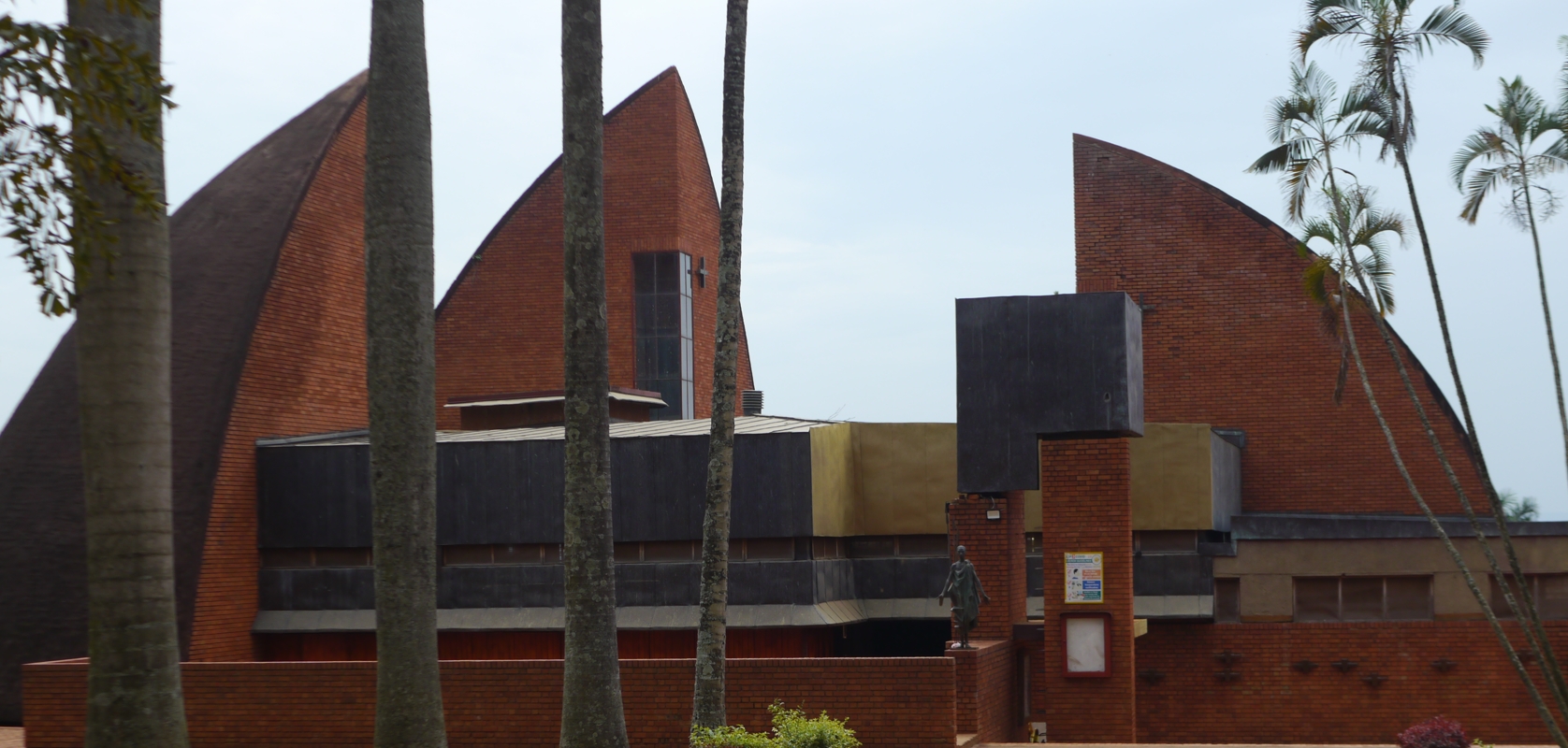
St. Noah Martyrs Shrine Kiyinda
per person
Uganda’s religious landscape is laden with sites enabling the pilgrim a chance of visiting, experiencing several holy sites, and partaking in the spiritual nourishment of their lives. Among holy places is the St. Noah Martyrs Shrine located in Kiyinda Mityana.
Mityana is a wonderful place that welcomes all believers to visit, see the grace and strength of martyrdom. This shrine is of immense historical and religious significance for pilgrims from across the globe. Kiyinda is situated in the Diocese of Kiyinda-Mityana, in central Uganda. St. Noah Martyrs Shrine is accessible from Mityana town, approx… 30 kms away from Kampala city, accessible by road, and a 4-hour drive from Entebbe Airport. Being near the main transport facilities, the shrine’s proximity assures the accessibility of pilgrims from distant places. The shrine commemorates the memory of St. Noah, who was among the Ugandan Martyrs killed by King Mwanga II in the late 19th century. Although St. Noah as a church was not specifically canonized, St. Noah is one of 22 Ugandan Martyrs canonized by Pope Paul VI on October 18, 1964. This is a reflection on the endurance and strength of suffering faithfuls during tribulations for the Christian faith. The Kiyinda shrine is a living memory of sanctified men and women, a site for prayer and reflection by all Catholics seeking witness to their unshakeable commitment to Christ. Its significance lies in the fact that it is most directly related to the Ugandan Martyrs. The martyrs were a group of youths, including St. Noah, who refused to forsake their faith, brutally persecuted and martyred. The life of St. Noah and the other martyrs is a powerful witness to courage, sacrifice, and unwavering faith.
Kiyinda offers pilgrims the chance to pray where the martyrs lived and endured, strengthening their bond with the early Church. St. Noah Shrine is not just a place of historic memory but a place where Catholics can go to revisit their spirituality, feel inner peace, and get close to God. The shrine is a successful spiritual haven a quiet contemplation, prayer, and worship. For pilgrims, going to this shrine is a form of reflection on the martyrs’ martyrdom and recommitment to Christ’s teachings. Other features that make this shrine unique are referred to as an intercession shrine, where martyrs intercede on behalf of believers in God’s throne through their ultimate sacrifice and holiness. Pilgrims receive deep spiritual rebirth, tranquility, and physical healing through prayer and supplication. Martyrs at the shrine, though not seen with the material eye, are felt in the hearts of believers by faith and devotion. It is a blessed shrine for all those who visit seeking refuge in God. A tour of the shrine is a profoundly spiritual exercise that offers some pretty unique benefits that no other venue can offer.
First, it offers a unique opportunity for Catholics to approach closer to the life and martyrdom of the martyrs. It is not a historical monument; it is a living house of worship and spiritual growth. By recalling the sacrifices of martyrs, pilgrims are encouraged to practice faith fearlessly and sincerely in the world today. Second, the shrine has room for silent prayer and reflection in the serene atmosphere that brings inner peace and deep reflection. This peaceful environment is particularly beneficial in times of worry, stress, or spiritual desolation since it allows pilgrims a chance to get away from stresses, spirituality, and a Godly relationship. Many pilgrims have experienced the shrine as a life-changing experience, with healing and spiritual maturity. The shrine receives many pilgrims yearly, especially on Martyrs Day, commemorated with Masses, processions, and prayers, witnessed by throngs of visitors. Pilgrims visit the shrine annually for prayer, meditation, and recollection of martyred saints. It acts as a reminder to Catholics regarding the sacrifice made by martyrs and the effectiveness of the Christian faith. The pilgrimage also presents Catholics with the opportunity to convene as a group to appreciate the shared religion that they adhere to and to re-commit to living the Word of Christ. Although the shrine has a high level of awareness among Uganda’s Catholics, there are some facts about its history and importance that are not as well known to the rest of the world. For instance, Kiyinda shrine is only one of the shrines that constitute a large group of martyrs’ shrines spread throughout Uganda. Pilgrims to the shrine are usually persuaded to visit other places relevant to the region around the martyrs, which provides a more comprehensive understanding of the history and heritage of the saints. The connection between sites provides pilgrims with a broad and complete spiritual experience. The shrine is part of a broader religious chain in Uganda. Pilgrims are obligated to visit other important sites that are connected to the martyrs’ story. Apart from religious significance, the shrine is placed in a peaceful, beautiful surrounding that contributes to the pilgrimage experience.
The surroundings are peaceful with vegetal cover and nature everywhere, offering pilgrims a chance to engage in a dialogue with God using nature. The peaceful environment gives space for the shrine to be used as a place for spiritual recharging, far from the distraction of the world. Improvement of facilities around the area, like good roads and hotels, eases pilgrims’ access. The environment also offers local cuisine and culture that nourishes the body, mind, and spirit.
Kiyinda is a representation of faith, sacrifice, and spiritual strength. It provides pilgrims with a special chance to strengthen their bond with God, ponder the Ugandan Martyrs’ sacrifices, and gain spiritual sustenance that grants eternal life. If you need peace, healing, or an intimate relationship with your religion, this shrine is a holy site that will transform your spiritual life. It is a pilgrimage site that touches the hearts of every Catholic, encouraging them to follow in the footprints of the martyrs and feel the power of their intercession before God.
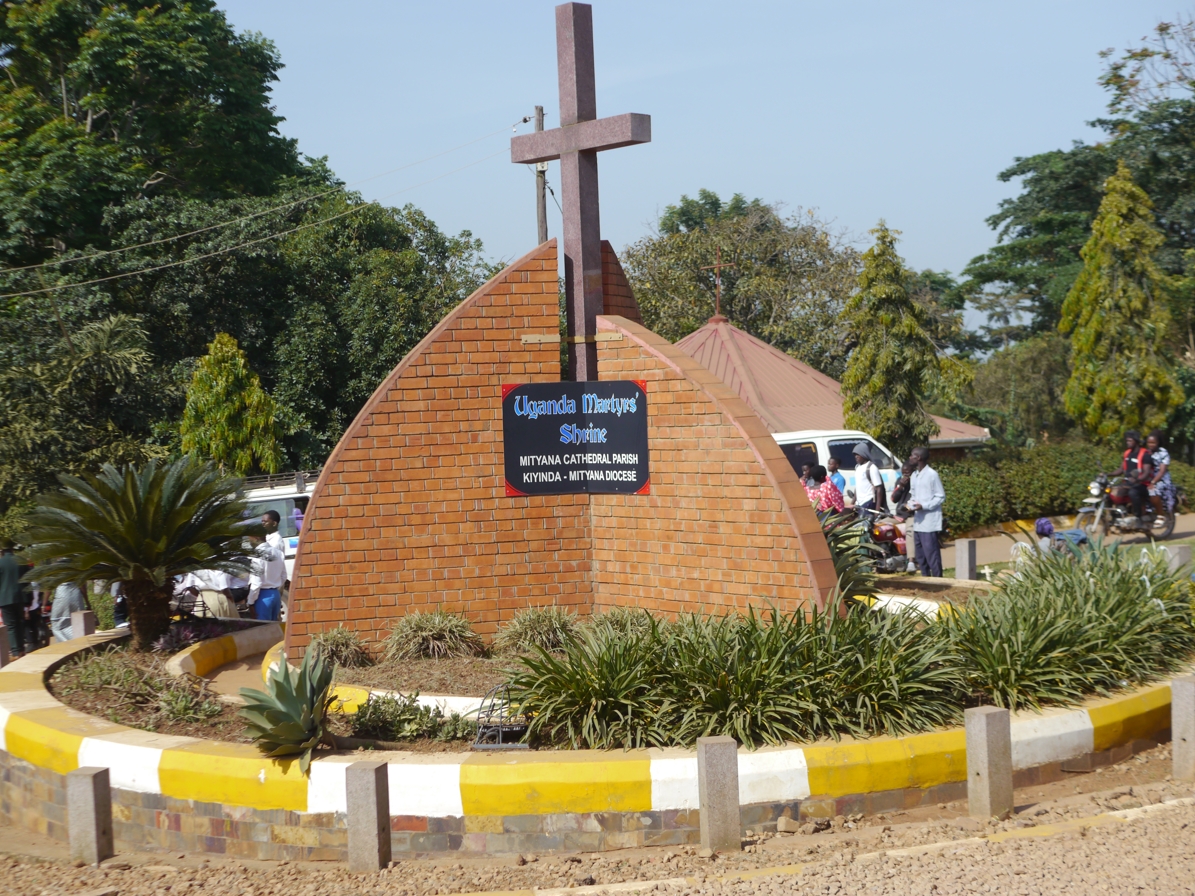
When one talks of the Uganda Martyrs’ Shrine, what comes to mind is Namugongo. It is rare to think of another shrine of Uganda Martyrs’ outside Kampala. But there is another Shrine of Uganda Martyrs of a unique architecture found in Mityana, and it’s the Cathedral Church of Kiyinda Mityana Diocese. It was built in honor of and dedicated to the three martyrs of Mityana namely Noa Mawaggali, Luke Banabakintu and Matthias Mulumba Kalemba all originating and born of Mityana.
Banabakintu’s home became a prayer ground for the Christians at the time. It is in this home that Mawaggali shed his blood for the faith on 31st May 1986. The place where Baanabakintu’s home stood is where the magnificent Shrine was built and the nearby structures surrounding the cathedral. All these buildings stand right in the active environment of the home and working place. This Cathedral has three cones each representing a martyr of which the first cone represents Luke Banabakintu, the middle is for Noa Mawaggali and the Matthias Mulumba’s cone is just on the right of the Cathedral. The Village of Kiyinda where this Shrine was built was formerly called Kiwanga, where the employees of Mukwenda the County Chief of Ssingo used to stay as they executed the King’s assignments in the County. However time came when this village was taken over by Mukwenda’s entertainers called Abayinda thus the village came to be referred to as Kiyinda that is, “the place of Abayinda.”
The shape of the Cathedral draws back to the African way of building style called the edge cone. This kind of building was smiler to that of Amasiro (the house of king’s graves at Kasubi in Kampala. This unique design is best explained by the architect himself Dr. Justus Dahinden, who was also responsible for the architectural plan of Namugongo Martyrs’ shrine. Part of the walls if this church are opened when Mass is going on because the church has to be an open house and it needs courtyards with shelters.
Dr. Dahinden says, “In the church itself the Christian community will be formed by means of the dialogue.” The two ambos placed in this church, therefore, serves this purpose. The pews are modeled on the African style of chairs. “The community does not sit on imported European pews but it sits on elevations of earth, which are, according to African customs, directed to the middle of the rooms.” Concelebration was a foreign thing before the Second Vatican Council. The Mityana Shrine was built after the Council hence it had to reflect the concelebration that had been accepted by the council. “The alter placed in the middle of the church is built for a numerous concelebration. The architecture placed around permits a colorful liturgy much appreciated by the active church of Africa. Dahinden narrates.
What is so outstanding about this church are the three cupola-segments seen from very far. Dr. Dahinden revels, “The church of Mityana with its cupola segments which contains the baptistery with the singers, the sister’s choir with the tarbernacle and the confessionals obtain their form-expression from old African styles, then ‘edge-cone’. This shape is a very old symbol of Bantus and can be found in the King’s graves at Kampala, in other words it is the form of original African homes.” The color of the church is dark brown representing Noa Mawaggali’s blood that was shed in this place. Its seating capacity of 530 people and another 600 people can be in the church compound.
The Association For the Uganda Martyr’s’ Shrines (AFUMS) that comprises of 27 members from Switzerland, Belgium, Germany, Italy, France, Holland, Canada, USA, South Arica, Cameroon, Congo-Kinshasha, Tanzania and Uganda contributed some of the funds that harvested this cathedral. Much as the above contributed funds but the major donors were the Christians from the Catholic Dioceses of Augsburg and Hergogenbosch. In the words of the Archbishop of Kampala at that time, Emmanuel Kiwanuka Nsubuga, “To more than anyone else, the development and the completion of Mityana Martyrs center at the parish of Mityana must be credited to His Excellency, Bishop Dr. J. Stimpfle, and the Diocesans of the Diocese of Augsburg, the foster-diocese of the Parish of Mityana”.
The foundation stone for this church construction was laid on December 1, 1964 by Bishop Joseph Stimpfle of the Diocese of Augsburg, Germany. Its construction was completed in less than four years and it was dedicated on February 11, 1968 during Mass led by none other than +Joseph Stimpfle and Cardinal Agagian from Rome was the guest of honor while others in attendance was Cardinal Emanuel K. Nsubuga of Kampala archdiocese and Bishop Adrian Kivumbi Ddungu of Masaka Diocese.
During the dedication of this church, the relics of Charles Lwanga and Matthias Mulumba Kalemba together with these if Ulrich and Africa, the patron saints of the Diocese of Augsburg, were placed beneath the alter of this church thus cementing the close friendship that existed the Christians of the two ecclesiastical seas. Then, few years back relics of Daudi Okello and Jildo Irwa were also placed in the same alter. These were two young catechists in Pimol, Gulu Diocese. They were martyred for their faith in 1918 and on October 20, 2002 Pope John Paul II beatified them.
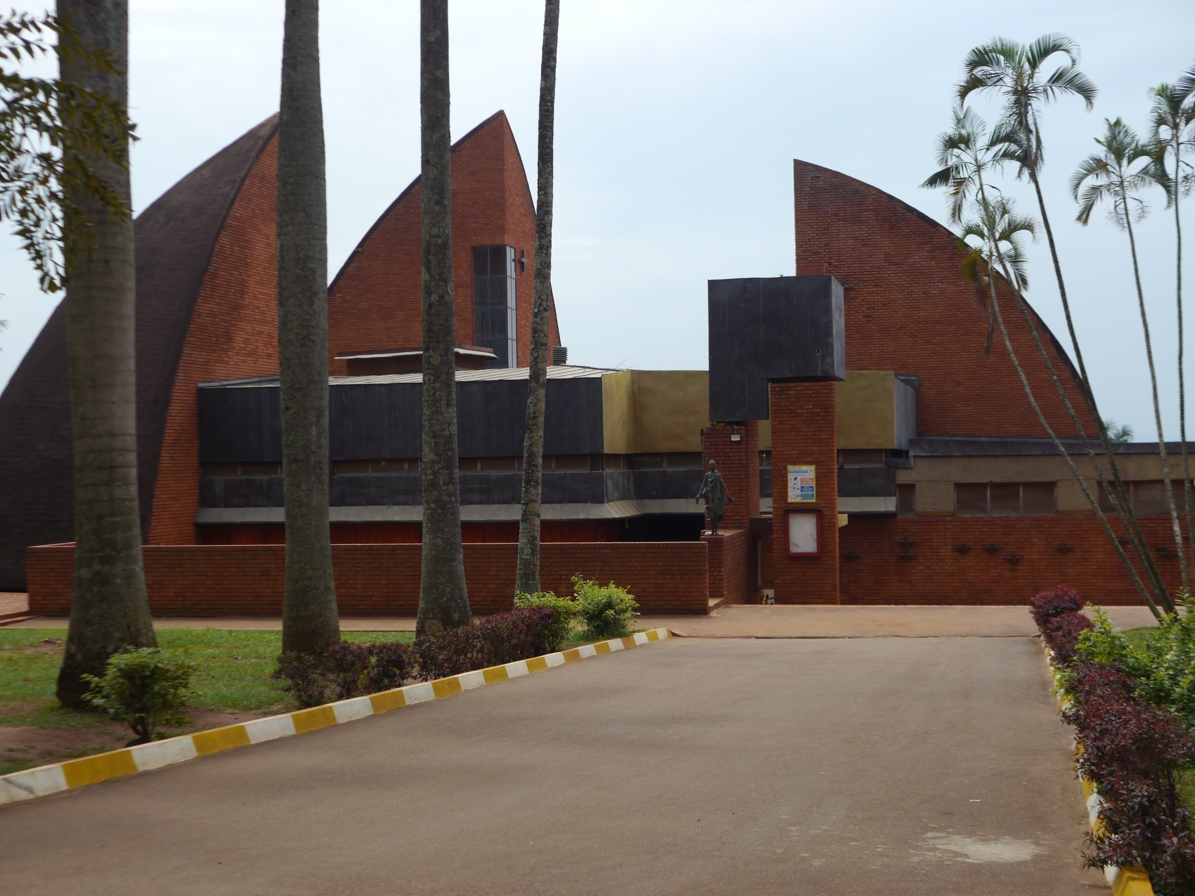
KIYINDA MITYANA DIOCESAN CATHEDRAL
The Holly See of Kiyinda Mityana is headed and the seat of the diocesan Bishop. It is here that you find the cathedral and the Diocesan administrative headquarters. Saint Pope John Paul II, the then Holy Father, while announcing the creation of this diocese, designated Kiyinda as the Centre of the Diocese and previously Parish Church and the Martyrs’ Shrine was designated as the Cathedral of the new Diocese of Kiyinda Mityana.
Here was the home of St Luke Banabakintu, one of the heads of the Christians, where the Christians, the ne neophytes and catechumens would gather for Christian’s instruction, prayers and briefing from previous Sunday liturgy and homily by the representing Christians who had walked to Nalukolongo for Mass.
The Diocese of Kiyinda Mityana covers a radius of 11,965 Sq.Kms with a population of more than 1,431,000 of which 544,000 are Roman Catholic. The Diocese comprises of civil districts of Mityana, Mubende, Kassanda, Kiboga, Kyankwanzi and Ggomba.
It was curved from the Arch diocese of Kampala on July 17th, 1981 and inaugurated on November 22nd 1981 with the first shepherd Bishop Emmanuel Wamala (now His Eminence Cardinal Emmanuel Wamala) who received His ordination as a Bishop was on the same day of the inauguration of the Diocese by the Late Emanuel Cardinal Nsubuga, a son of Mityana Parish born at Kisuule Village.
Bishop Joseph Mukwaya became the second shepherd assuming office on October 8th, 1988 following the appointment of Bishop Wamala as Co-adjutor Archbishop of Kampala Archdiocese.
Bishop Joseph Antony Zziwa is the third Ordinary of Kiyinda Mityana and is the serving Bishop of the Diocese. He was born on February 16th, 1956 at Kasambya Village, Our Lady of Fatima Mubende Parish. He was ordained a Priest November 16th, 1980 for the Archdiocese of Kampala. He was appointed co-Adjutor Bishop of Kiyinda Mityana Diocese on December 18th, 2001 and ordained Bishop on March 16th, 2002. His appointment was on October 23rd, 2004.
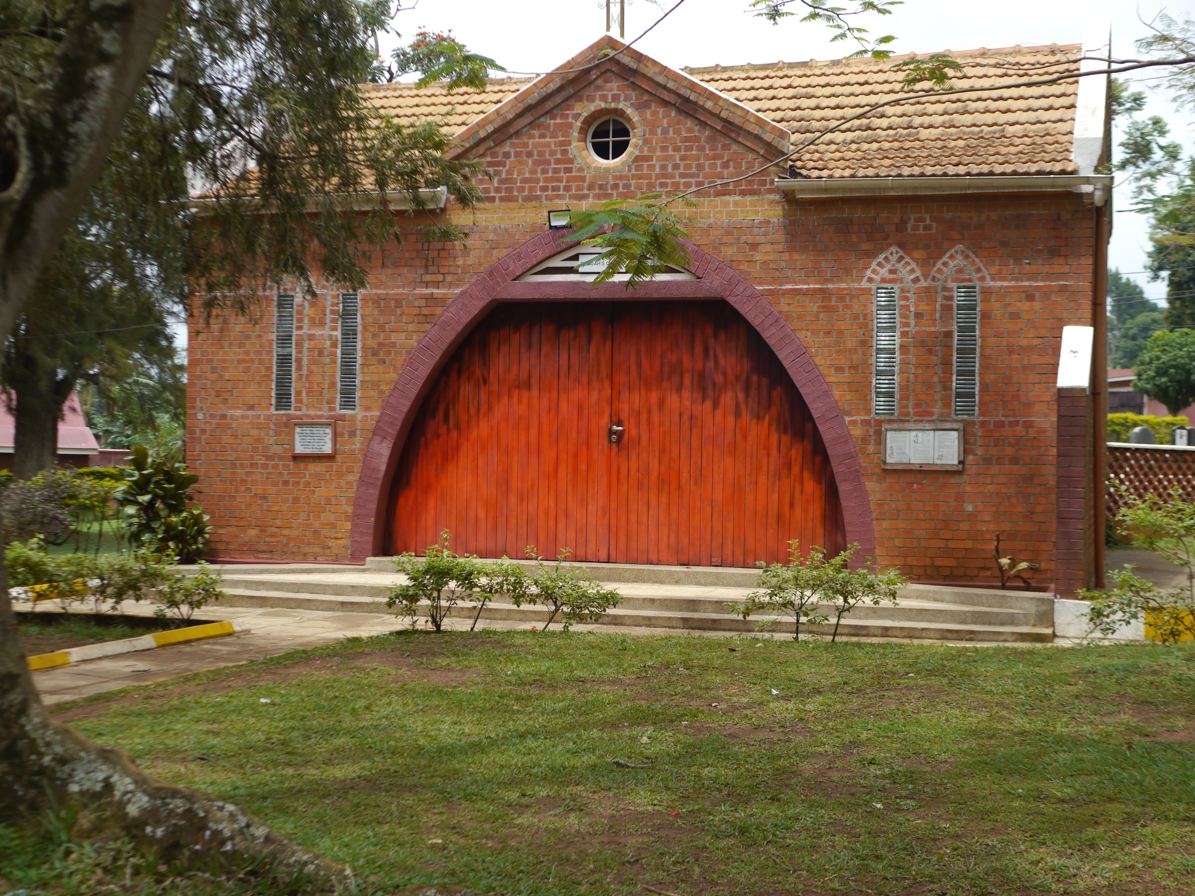
ST NOAH’S CHAPLE AT KIYINDA WHERE THE LATE BISHOP MUKWAYA WAS BURRIED
Kiyinda Mityana Diocese is comprised of Parishes of St Joseph Bbanda Parish, Our Lady Queen of Angles Bukalagi Parish, Our Lady Queen of Peace Bukalammuli Parish, St Joseph Busunju Parish, Our Lady of Mount Carmel Busuubizi Parish, Our Lady of Assumption Buyambi Parish, St Joseph Buyinjabutoole Parish, St Lawrence Brindisi Kannyogoga Parish, Our Lady Source of Joy Kasambya Parish, St. James Katente Parish, St. Simon Katuugo Parish, St. Felistus Kiboga Parish, St. Matia Mulumba Kiganda Parish, St. John the Baptist Kkungu Parish, St. Kizito Kyengeza Parish, St. Charles Lwanga Lwamata Parish, St. Charles Lwanga Lwangiri Parish, Our Lady of Refuge of Sinners Maddu Parish, Our Lady of Assumption Mirembe Maria Parish, Uganda Martyrs Misigi Parish, St Noa Mawaggali Mityana Cathedral Parish, Our Lady of Fatima Mubende Parish, Our Lady of Fatima Mwera Parish, St. Mary’s Naama Parish, Blessed Trinity Naluggi Parish, Our Lady of Presentation Ndibata Parish, Our Lady of Nativity Vvumba Parish, St Joseph Ssenkulu Parish, St Joseph Kibalinga Parish, St. Augustine Lwebisiriiza Parish and Kyankwanzi Parish.
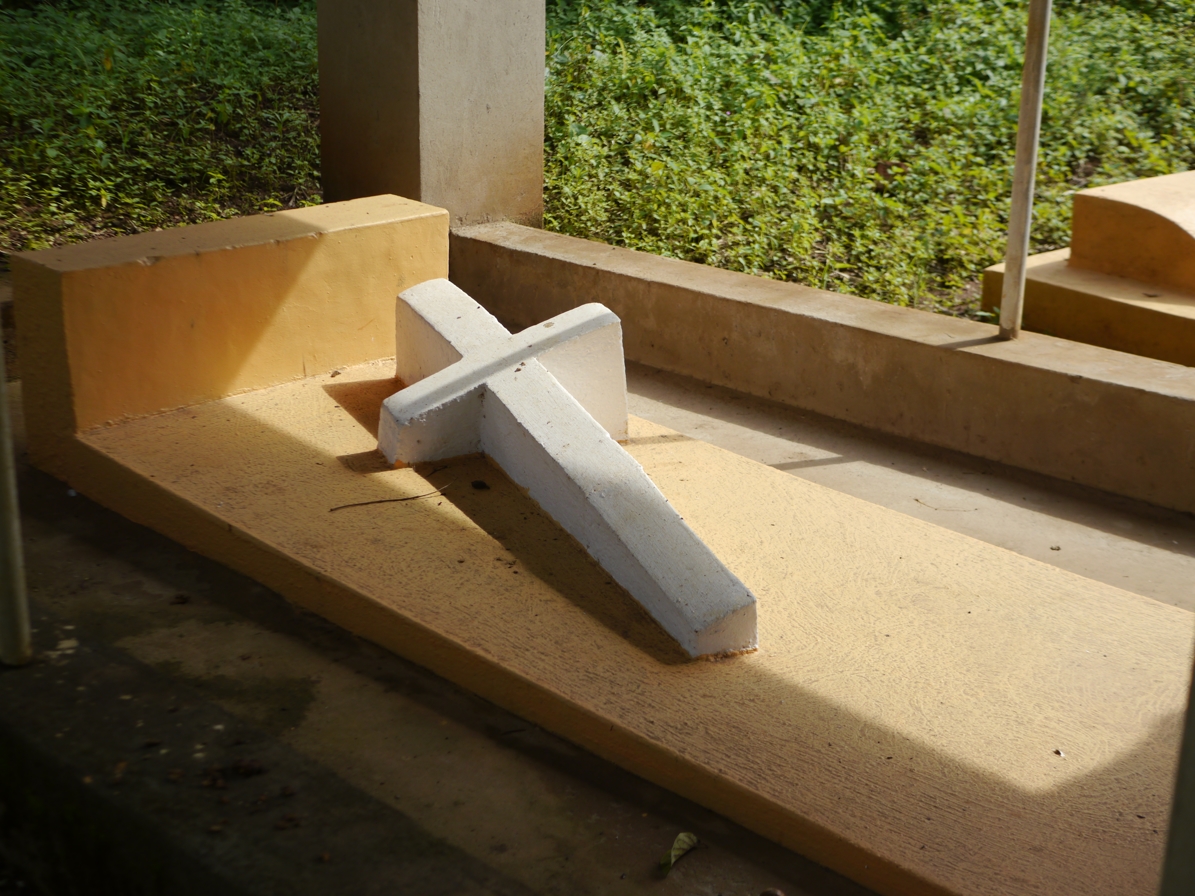
ST ABROSIO KIBUUKA TOMB
SAINT AMBROSE KIBUUKA
Ambrose Kibuuka was born at Ttamu in Ssingo County. A muganda by tribe, and belonged to Lugave (Scaly Ant-Eater) Clan. His father Kisuule Balamaze, was an official King’s drummer of Mujaguzo. Ampeera was Kibuuka’s mother. Kibuuka’s birth must have been hailed with great joy because he was the first male child to survive. His father who was advanced in years had no less than thirty daughters and hand almost given up hope of a son and heir.
At the age of 16 years, Kibuuka was taken to the King’s court as a page under Kabaka Mwanga. He was active, social, talented in games, music and always cheerful and charitable. On embracing Christianity, both abandoned practicing witchcraft and burnt all items connected with it, they were disowned by the clan, an idea he willingly accepted.
Having heard about the martyrdom of Joseph Mukasa, it seemed likely that he might, at any moment, be called upon to lay down his life for his faith. That being the case, Kibuuka and Kiwanuka Achilles together with other pages, stole by night to the Catholic Mission to ask for immediate baptism.
They were baptised by Pere Lourdel on November 16th 1885, receiving the names Achilles and Ambrose respectively. After his baptism, Ambrose Kibuuka, quite convinced that the Martyr’s crown would soon be his, begged leaves of absence and went to bid farewell to his parents. He firmly resisted all their entreaties to abandon the religion that placed him in such peril, and returned to his post to await his fate.
Kibuuka with other pages were brought to Kabaka Mwanga to explain whether they had definitely decided to become Christians. Mwanga asked them several questions: Are you all Christians? ‘Yes we are Christians.’ Replied Ambrose Kibuuka and other pages in the group. ‘Are you unshaken in you resolve to remain Christians’? ‘Yes, quiet definitely’! ‘If you choose not to regard that as a crime, we shall be grateful to you, but we shall never cease to be Christians, whatever the outcome.’
King Mwanga ordered Mukajanga to take the Christians to Namugongo for burning. Ambrose Kibuuka was arrested on May 26th 1886, taken to Namugongo and burnt to death on June 3rd 1886 at the age of 18.
Ttamu is famous in Buganda Kingdom because it is where the head of Kabaka’s royal drum called Kawuula performs his job of drumming Mujaguzo. Kisuule Balamaze lived at Ttamu where he was buried. The sign of a cross on Kisuule’s tomb indicates that he was not baptized. Many Christians from Kiyinda-Mityana and beyond make a Pilgrimage to Ttamu every year, usually, on the second Sunday after 3rd June. This Pilgrimage is in honor of Ambrose Kibuuka’s faith and trust in Christ for whom he was martyred. Ambrose Kibuuka is the patron saint of societies and youth movements.
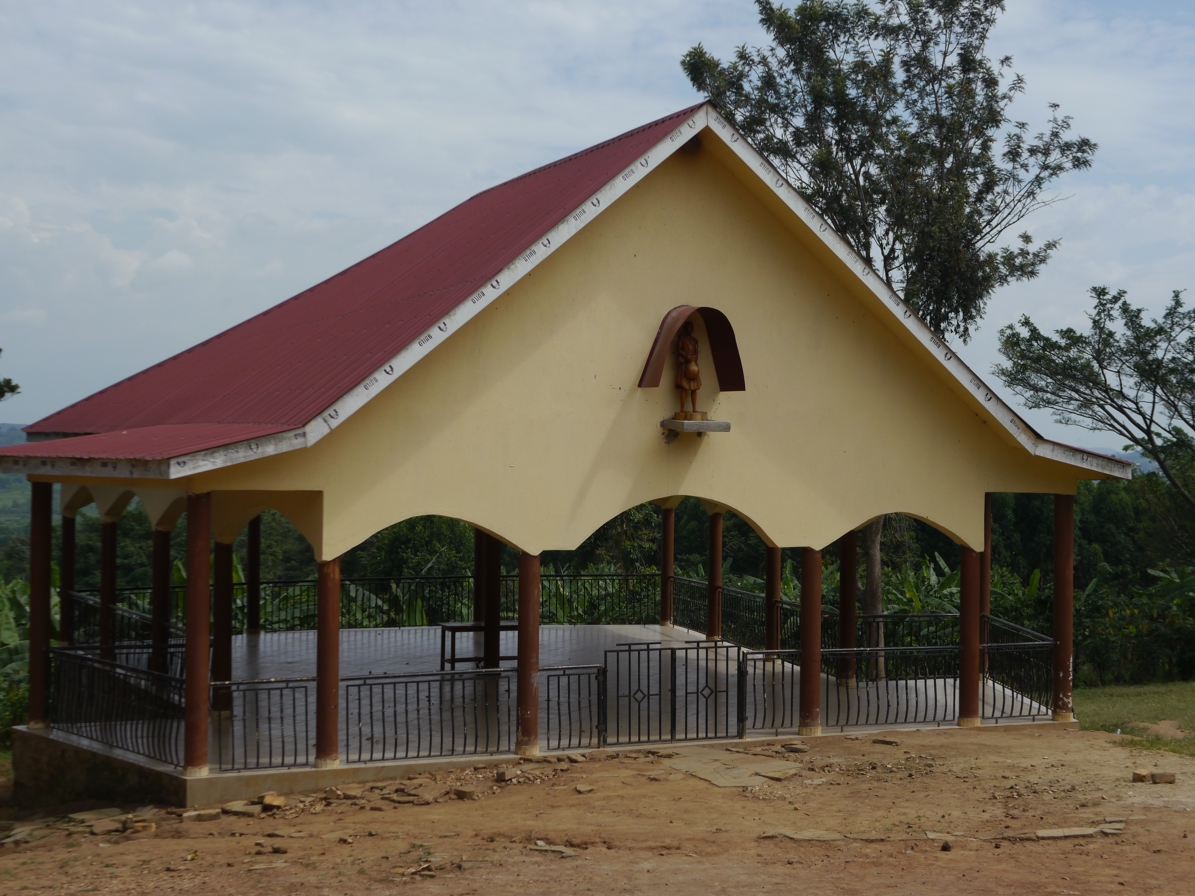
ST NOAH BURIAL PLACE NKAZEBUKU
SAINT NOAH MAWAGGALI
Noa Mawaggali a Catholic martyr is known as the patron saint of workers, technicians and artists. Martyred around 1886 for his Christian faith, celebrated for his skill as a porter, and baptized shortly before his execution by King Mwanga II’s army. He was killed in Mityana, tied to a tree, and left for dogs, becoming one of the famous Uganda Martyrs.
Noa Mawaggali was at Nkazebuku, present day Misigi Parish of Kiyinda Mityana Diocese. He was from a Bush-Buck (Ngabi) clan and his martyrdom is significant for his steadfast faith and his skills, which he used to build a house for his Christian Instructor, Matthias Mulumba Kalemba, and provided for his mother and sister. He exemplifies Christian devotion and courage, with shrines and devotions to him prominent in Mityana.
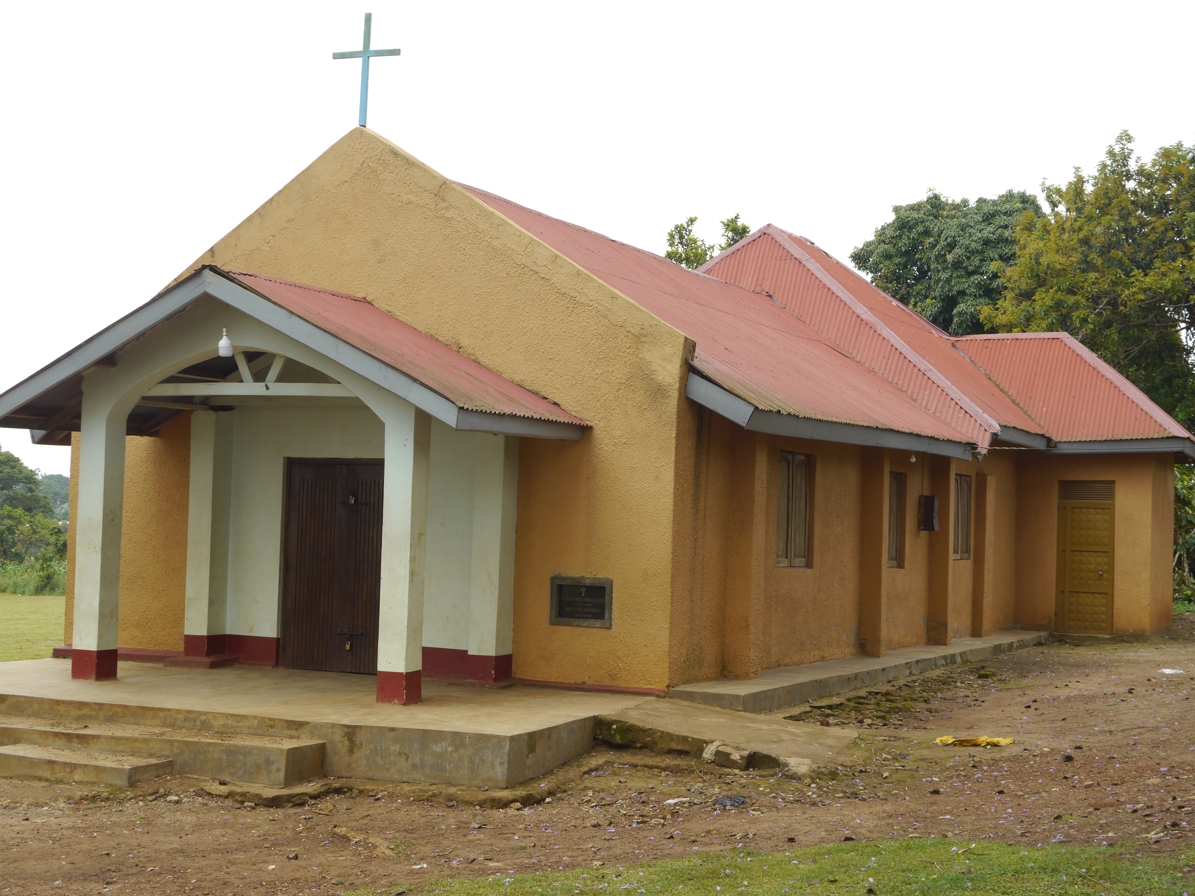
ST MATIA MULUMBA CHURCH AT BUTEGA-MITYANA ST MATIA MULUMBA CHURCH AT BUTEGA-MITYANA
SAINT MATIA MULUMBA
Matia Mulumba also known as Mathias Mulumba Kalemba was a Uganda Catholic who was martyred on May 30th, 1886 at the age of 50 years and his birth is said to be on 30th, May 1936. Mulumba is said to be among the Ugandan Martyrs who underwent the most excruciating pain, he was skinned alive and left to die.
He was born in Bunya County in Busoga. He was adopted by Fr. Magatto and after Magatto’s death, Mulumba stayed with Magatto’s brother known as Buzibwa. He first converted to Islam but later became a Catholic catechumen on May 31st 1880 and he was baptised by Pere Ludovic Girant in Mityana at his ancestral home at Butega.
While constructing Kabaka Mwanga palace that had gotten burnt on February 22nd, 1886 Mulumba together with Charles Lwanga, Lukka Banabakintu and Mukwenda were arrested, imprisoned and condemned to death by Mukasa, the chief chancellor. Mulumba was taken to Old Kampala, from where he was burnt alive, and Lwanga was taken to Namugongo.
In 1920 Pope Benedict XV beatified Mulumba and on October 18th, 1964 he was canonized by Pope Paul VI.
SAINT LUKE BANABAKINTU
Luke Banabakintu was one of the three martyrs belonging to the Christian Community of Mityana, about 45 Miles North West of Uganda’s Capital in the Kingdom of Buganda. Banabakintu belonged to the Eel branch of the Lungfish (Mamba) clan and was born in the hamlet of Ntolomwe in Gomba County.
His father, Mukwanga, had several wives and thirty children, of which Banabakintu was the eldest, the son of his first wife Kasubiza of the Seed (Mpindi) clan. When he was sixteen years old, his uncle Jjagwe visited the family, and, at the youth’s own request, took him to live with him in Mityana. From Mityana, he entered the service of Mukwenda the county chief of Ssingo. Banabakintu prospered and was given the small fief of Kawinga, where his task was to supervise other servants of the chief, who lived outside their master’s enclosure.
On May 31st, 1880, he was enrolled by his master in the Catholic catechumenate. He attended instructions with Matthias Kalemba and him, also frequented instructions given by the Anglican missionaries. He was baptized on May 28th, 1882 the feast of Pentecost.
Banabakintu bonded so much with Matia Mulumba and assisted him in giving instructions to the catechumens at Mityana. There were more than two hundred members of the Mityana Community. Whenever he could, Luke made the twelve journey mission in order to receive the sacraments of reconciliation and Eucharist.
He was between 30-35 years old at the time of his martyrdom. When the persecution came up on May 25th, 1886, Luke was on his way to Mmengo from Mityana, and stayed the nights with his friends Cyprian Kamya, who had been baptized with him four years earlier. The next morning he proceeded to his journey to the Capital and reported to the Mukwenda, that he expected to be killed and assuring him that he would never betray the name if of the children he had been instructing.
Luke spent the night of May 26th with Matthias Mulumba Kalemba as prisoners of the county chief. Next day, they admitted that they were Christians, and were condemned to death by Mukasa the Chancellor. On the way to the place of execution at Namugongo, Kalemba challenged the executioners to kill him, which they did non Kampala hill. Banabakintu, however, continued alone and joined Charles Lwanga and his fellow martyrs on the afternoon of May 27th. He was among the 31 victims, Catholics, Anglicans and others, of the great Namugongo holocaust on Ascension Day of June 3rd, 1886, twelve of whom are officially canonized catholic martyrs. They were beatified by Pope Benedict XV in 1920 and were announced saints by Pope Paul VI in 1964.