
All Uganda Martyrs
Their sacrifice is our strength. Their memory lives on
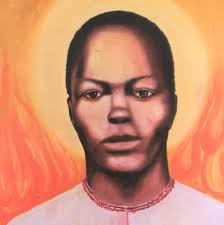
St. Charles Lwanga
Lwanga was a Muganda of Bush-back (Tragelaphus Scriptus Ngabi). His father was Mabingo, a bark-cloth maker and his mother Gwokiiya of the Genet Clan. He was born about 1861 at Birinzi in Buddu County. Lwanga was brown, of mighty strength and a great wrestler.
He was and exceptional leader a head of the pages and as Joseph Mukasa Balikuddembe, a great Christian Leader of both Catholics and Protestants. Lwanga is admired for his possibly untouched virtue of chastity.
During the Christian persecution, Charles Lwanga displayed unshakable faith and exceptional Christian Bravery at Whom the Christian Martyrdom of many pages was centred.
To punish him, Lwanga was separated from the group by Ssenkoole, the assistant chief executioner, burnt in a slow fire from foot to head at Namugongo Busaale Charles Lwanga was burnt at the Catholic Basilica, at exactly where the alter is Now.
It was Thursday 3rd June 1886 towards noon. He was at the age of 25. Lwanga died in a slow painful fire while praying for the conversion of the executioners and the King. St Charles Lwanga is the patron of the African Youth and of Catholic action.
St. Charles Lwanga
Lwanga was a Muganda of Bush-back (Tragelaphus Scriptus Ngabi). His...
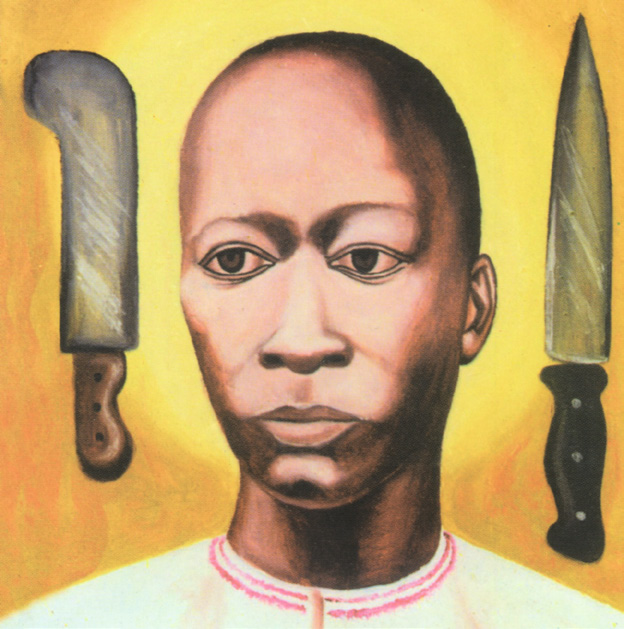
St. Mathias Mulumba Kalemba
A Musoga from Bunya. He was captured by a Muganda worrier Nagatto who treated him as his own son and gave him the name of his own clan, the Edible Rat (Tryonomys Swinerenuanus – Musu)
Mulumba because of his faithfulness and Justice was promoted to various posts, the highest being assistant county chief of Bulemeezi and Ssingo consecutively. He had many wives but fought hard to remain one Kikuwambuzza or Kikuwa as his legal wife.
Mulumba was a faithful courageous, penitent and powerful Leader. He died the most brutal and Lingering death at Old Kampala from 27th to 30th May 1886.
His Limbs were cut off first, stript of flesh cut from his back and stayed in the state without a complaint for three days praying for his country and executioners. He was about 50 years old.
Mulumba was the ideal chief and follower of Christ, meek and humble. Due to him humility, Mulumba, thought a big chief, used to carry his own luggage instead of giving it to his servants. He used to fast and make mortifications.
Mulumba is the patron of chiefs and Families.
St. Mathias Mulumba Kalemba
A Musoga from Bunya. He was captured by a Muganda...
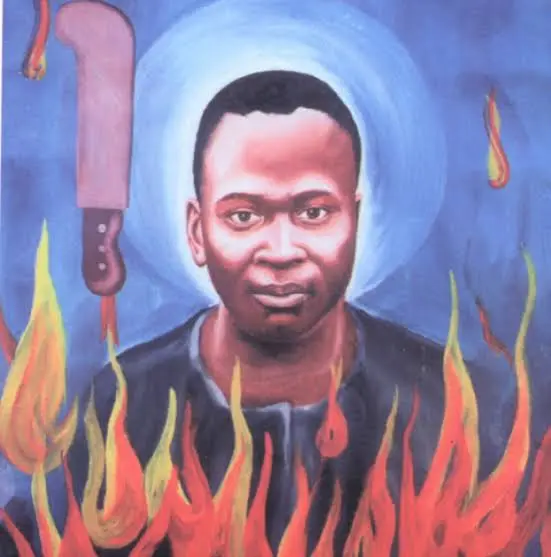
St. Joseph Mukasa Balikuddembe
A Muganda of Grey – rat clan (Kayozi). His father was Njubeseeta Nkulakito, not Mazinga as some take it to be. His mother was Kajwahya, a mutooro not Munyoro as it was believed.
Mukasa Balikuddembe was taked to King Muteesa 1’s palace and Major Domo of King Muteesa I and King Mwanga II.
Joseph Mukasa was the head of the Catholic Church in Uganda during the fight of the Catholic Missionaries in Tanganyika (Tanzania). During the absence of the Missionaries, the young church continued to grow.
At one occasion, a cobra of about five feet entered king Muteesa’s house and after failing to find a stick, Mukasa rushed to and strangled it his hands. The King from that time gave liberty to Christianity and named him Balikuddembe – the Christians are at peace to practice their religion.
Balikuddembe was killed and his body was burnt on Sunday November 15, 1885 at Nakivubo at the age of 20 years, He was the first Ugandan Catholic martyr.
Balikuddembe is the patron of politicians and chiefs.
St. Joseph Mukasa Balikuddembe
A Muganda of Grey – rat clan (Kayozi). His father...
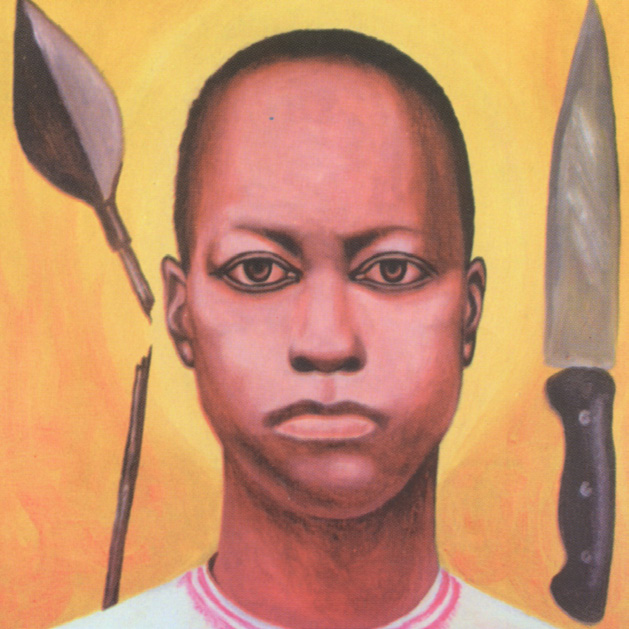
St. Denis Ssebuggwawo Wasswa
He was a Muganda of the edible-rat (Tryonomys Swinderenianus – Musu) clan born at Kigolooba in Bulemeezi County. His father was Kajjansi and his mother was Nsoga, a Musoga. His parents migrated to Bunono (Nkumba) in Busiro County.
Ssebuggwawo served as a page in King Mwanga’s Palace. He was talented and devoted musician with melodious voice.
Denis fought hard against the shameful sexual plays he was induced to by King Mwanga and this quickened his martyrdom. Ssebuggwawo was zealous, devoted to his work and through young, a very strong catholic.
Ssebuggwawo was the first victim of King Mwanga’s rage in the evening of 25th May 1886. He was severely scourged by the King Himself, but was killed the following morning at Munyonyo on 26th May 1886 at the age of 16.
Denis was zealous from Christian faith and renowned for his modesty. St Denis Ssebugwawo is the patron of singers, musicians and choirs.
St. Denis Ssebuggwawo Wasswa
He was a Muganda of the edible-rat (Tryonomys Swinderenianus –...
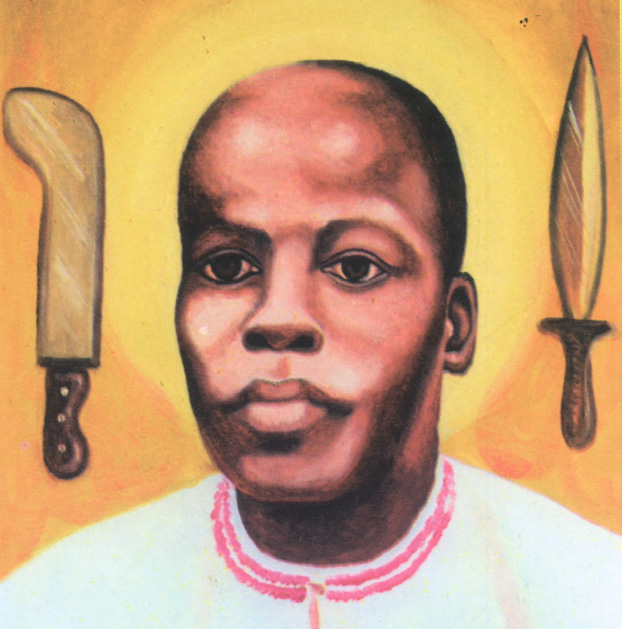
St. Andrew Kaggwa
Andrew Kaggwa was a Munyoro from Kooki, Bukuumi Parish in Bugangaizi Parish in Bugangaizi County. His father was Kahwa Kibijenge of the Kiwere Clan. About 1869 Kaggwa was captured by the Baganda raiders, brought to Buganda as one of King Muteesa’s pages.
He was smart, clever, and obedient and soon became a skilled carpenter. Kaggwa became the Bands-master General (Mugoowa). He converted to Catholicism mainly because the Catholic Missionaries had a sacrifice of Celibacy to their God. Kaggwa being zealous and pious Catholic, he was properly married to Clare Batudde Nakazibwe, a Muganda.
Andrew Kaggwa had a very strong faith. Kaggwa and his friend Balikuddembe were constant at the parish and the missionaries had much confidence in them. But the Arabs through the mission buys managed to steal a lot of property from the parishes secretly. The Missionaries jumped to a conclusion that it was none other than Andrew and Joseph Mukasa. On learning of this, Andrew and Joseph Mukasa devoted themselves to prayer and put themselves into God’s providence. Some of their friends advised them to abandon the religion of the Whiteman.
“If it was a religion of the White man, we would have abandoned it by now”, they replied. “But it is the religion of God. The White man just brought his religion of God, we cannot therefore abandon God” they continued.
Andrew died a Martyr at the age of thirty, Wednesday May 26, 1886. His hands were first cut off as ordered by the chancellor and his body chopped to pieces at Munyonyo.
Andrew is the patron of teachers, catechists and families.
St. Andrew Kaggwa
Andrew Kaggwa was a Munyoro from Kooki, Bukuumi Parish in...
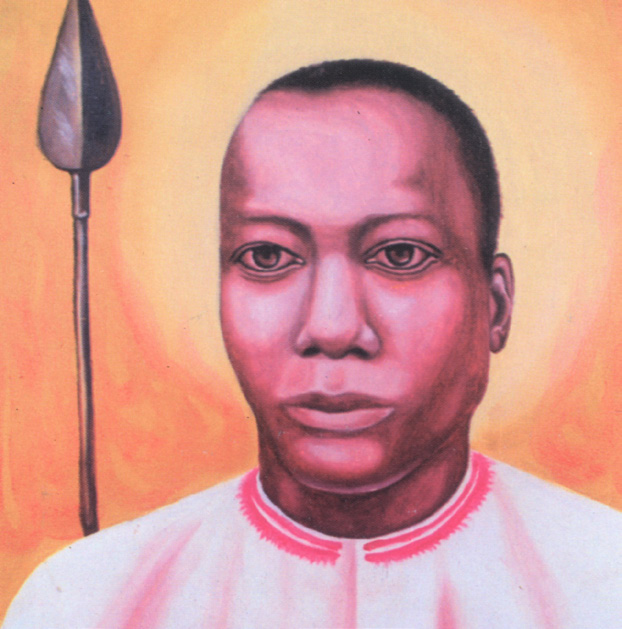
St. Ponsiano Ngondwe
He was the head of the Clan and his mother was Mukomulwanyi (Wife of a Worrier). Ngondwe was born and Bulima (Kyaggwe County) in Naggalama Parish, Lugazi Diocese. He served as a page of King Muteesa I. Latter during King Mwanga’s reign, Ngondwe was enrolled into militia. He was good at playing musical instruments and at parade. Thus he was made an assistant bands-general.
Ngondwe became a Catholic baptized on Tuesday November 17, 1885 by father Pierre Peter Girand.
Ponsian was an active and zealous catholic who tried to school himself in Christian Virtues.
Shortly before the Christian persecution, King Mwanga ordered a cttle levy known as NSOMOLANO. One of Mukaajanga’s herdsmen stole his cow and falsely accused Ngondwe. When Mukaajanga heard of it he put Ponsiano into prison without a trial.
When the Christian persecution broke out, King Mwanga remembered Ngondwe and ordered that he be taken to Namugongo to be burnt to death. They were tied up on one rope with a Moslem prisoner Abdul-Azizi Buliwadda who has a different case.
On reaching Ttabataba Ttakajunge present day Kyamula, Mukajanga took up his spear and drove it into Ngondwe several times until he was dead. It was Wednesday evening May 26th, 1886 at thirty years.
He is the patron of the soldiers, policemen and militia.
St. Ponsiano Ngondwe
He was the head of the Clan and his mother...
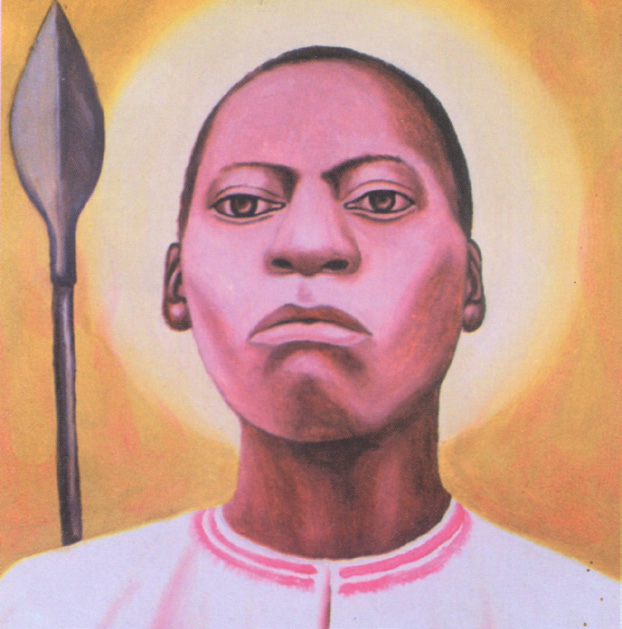
St. Anthanasius Bazzekuketta
Bazzekuketta was a Muganda of the monkey (Nkima) clan. His father was Kafeero Kabaalu Ssebaggala. The Mother was Namukwaya Kaddulibaale Nalongo of the Buffalo clan. The martyr was born at Kikuma near Mulajje Parish in Bulemeezi County in Kasana-Luwero Diocese.
Bazzekuketta was taken to the Palace of King Mwanga II and became a page under the leadership of Charles Lwanga who instructed the boy to Catholicism. He was clean, orderly, faithful, and obedient boy. He was selected to be in charge of the King’s ceremonial robes and ornaments.
Bazzekuketta was chosen to be in charge the King’s treasury of money and ivory though he was still a boy.
While Bazzekuketta was performing his duties perfectly and talking the religious instructions seriously, King Mwanga started persecuting the Christians.
Monday night November 16th 1885 eighteen catechumens, in fear of being killed without receiving baptism were baptised, Bazzekuketta included. He got the name Anthanasius. Joseph Mukasa Balikuddembe had been killed on 15th November 1885.
Anthanasius was arrested with his fellow Christians on Wednesday 26th May 1886. He was very happy and always eager to die for Christ. The next morning on their way to Namugongo, Mukaajanga the chief executioner asked, “who would like to be killed where your Christian leader Balikuddembe was killed?”. At once Anthanasius answered, “Here I am why delay me as if there is no death here, and take me all the way to Namugongo?”. Anthanasius was speared to death at Nakivubo where Balikuddembe was martyred on Thursday morning of May 27th, 1886 at the age of twenty.
Athanasius is a patron of those in charge of finance, treasury and banks.
St. Anthanasius Bazzekuketta
Bazzekuketta was a Muganda of the monkey (Nkima) clan. His...
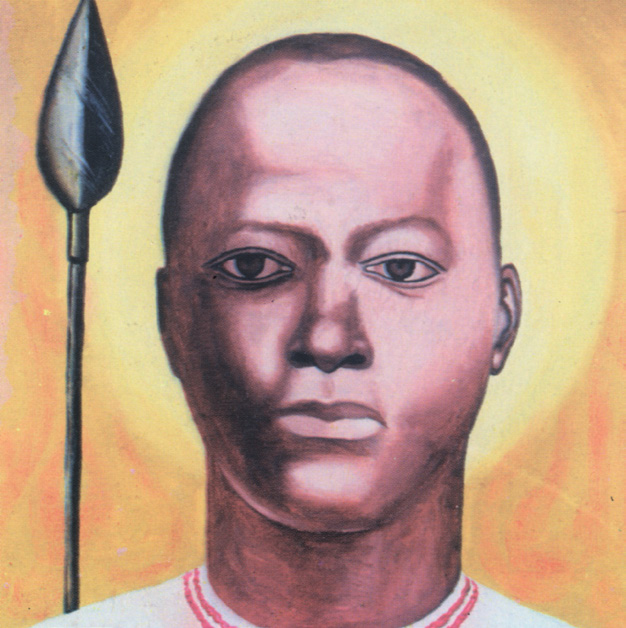
St. Gonzaga Gonza
Gonzaga Gonza was a Musoga. His father was Gonzaga of the Family of Zibondo of Bulamogi, belonging to the Bushback (Ngabi) clan. The mother is not known. Gonzaga first lived at Kigulu at Busambira Village, but later migrated to Bulamoji where Gonzaga was born. He was captured by Kasoma Tegusaaga Bulusi who treated him as his own son. Gonzaga behaved very well. He was obedient trustworthy, intelligent and hard working.
When King Muteesa I wanted boys for his service, Kasoma selected Gonzaga from among his sons for the job at the age of twelve. The boy worked in the palace’s private section of the enclosure under joseph Mukasa who soon converted him to Catholicism.
Gonzaga was zealous and pious catholic. One of the princesses fell in love with Namulabira, who was a friend to Gonzaga, but he refused, in revenge when the princess falsely accused him a falling in love with Nankya, one of the King’s wives. Nankya and Gonzaga were severely punished and Namulabira thrown to prison.
Gonzaga begged Mabuzi, the manager to release Namulabira to resume his imprisonment. Gonzaga offered to go back home and prepare for all the prisoners, for the food given to all prisoners was little and not well prepared.
Gonzaga was arrested at Munyonyo palace and spent a night at Mengo Palace in chains. The executioner failed to remove them but Gonzaga was determined to drug the chains fastened to his bleeding legs to Namugongo. On the way, he collapsed at Lubaawo junction and was speared to death by Mukaajanga, the chief executioner on Thursday noon 27th May, 1886 at the age of 24.
Gonzaga is the patron of prisoners, travellers, ill-treated and those in trouble.
St. Gonzaga Gonza
Gonzaga Gonza was a Musoga. His father was Gonzaga of...

St. Luke Baanabakintu
Baanabakintu was a Muganda of the Lung-Fish (Mamba) clan. His father was Mukwanga and his mother was Kusuubiza of the Nvuma (creeping pant) clan. Baanabakintu was born at Ntolomwe in Butambala County. This is where Mukwanga and his son Banabakintu picked up skills in the black-smith profession.
He was also in charge of Mukwenda’s fishermen of Lake Wamala, wood caters, potters, cooks e.t.c. Banabakintu was very clever with an exceptional memory, honest, cheerful, alert and respectful.
The Christians of Mityana used to send Baanabakintu on foot to Kampala, a distance of fourth miles or sixty-four kilometres every week for the priest’s Sunday sermons. He had to attend Sunday sermon and almost everything word by word and by heart. Then he could return to Mityana and relate the whole sermon to Mathias Mulumba. He had to keep the sermon, polish it and keep it for the following sermon on Sunday.
Baanabakintu received baptism together with his friend Mulumba on Sunday 28th May 1882. Luke and Mulumba were arrested on Wednesday afternoon on 26th May, 1886 at about 2:00 Pm, and they were after taken to Namugongo on Thursday afternoon 27th May 1886 but Mulumba was left behind and killed at Old Kampala.
Baanabakintu was taken to Namugongo where he was burnt to death on Ascension Day, Thursday noon 3rd June, 1886 at the age of about thirty.
Luke is the patron saint of fishermen, sailors, mechanics, students and black-smiths.
St. Luke Baanabakintu
Baanabakintu was a Muganda of the Lung-Fish (Mamba) clan. His...
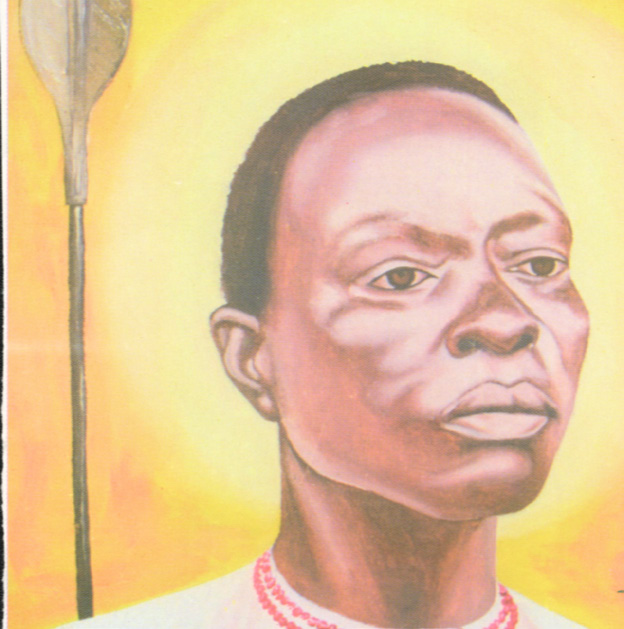
St. Noah Mawaggali
Noah Mawaggali was a Muganda from a Bush-Back (Ngabi) Clan. His father was Musaazi and his mother was Mmeeme. He was born at Nkazebuku in Ssingo County present day Misigi Parish in Kiyinda Mityana Diocese, around 1851.
There were nine children in the family but at the time of his death, two were only surviving. He and his sister Munakwatambuzamyoyo or in short munaku (the poor travels by thoughts).
When he grew up, he took up the service of Mukwenda. He soon learnt the new style of pottery for the improvement of his work. He copied some Aran European styles. For example cups, plates, teapots etc. Due to his skills in pottery trustworthiness, proper arrangement and co-operation, he was popular.
Despite of that, Mawaggali remained poor just at the verge of survival. But when he became a Christian, he put in all of his confidence and trust in God.
Mawaggali was baptised on 1st November, 1885. He was a great friend of Mathias Mulumba with whom they worked in giving Catholic instructions.
After the death of father Musaazi, Mawaggali took his mother Mmeeme and his only sister Mary Matilda Munaku, to live together with him. When the Christian persecution broke out, our martyr was at Mityana (Kiyinda) in Ssingo County. Very early on Monday morning at about 7:00Am on 31st May 1886, Noah was speared to death because of his religion by the executioner Kamanyi led by Mbugano. He was afterwards tied up and finally his body was thrown into a road junction to frighten the Christians.
He is the patron saint of the poor, technicians and artists.
St. Noah Mawaggali
Noah Mawaggali was a Muganda from a Bush-Back (Ngabi) Clan....
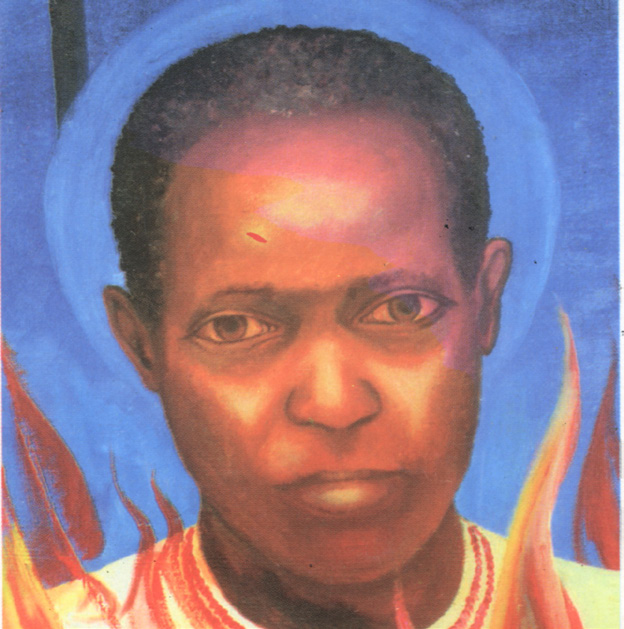
ST. JAMES BUUZABALYAWO
Buzaabalyawo was a Muganda of White Colobus Occidentalis (Ngeye) Clan. James’ father was SSebikejje Kabazzi Kalinda and his mother was Lwambuzabuggyo of the Grasshopper (Nsenene) Clan.
It was from Wamala his brother that Buuzaabalyawo was taken to King Muteesa’s Palace by Nalinnya Namukwaya one of his close relatives.
He became a Catholic mainly after proving the Celibacy of the Catholic missionaries and the behaviour of the Catholics, Joseph Mukasa Balikuddembe and Andrew Kaggwa in Particular. When King Muteesa I died, Buuzabalyawo left the palace, went and lived with Andrew Kaggwa there he took up Catholic instructions seriously.
When he had learnt enough, Kaggwa used to send him to palace and thus teach the Catholic religion to the prince Mwanga. Buuzaabalyawo picked up the skills and became one of Kaggwa’s able leaders of the King’s band.
He was baptized on 16th November, 1885 and given the name James. Tuesday evening of 25th of May 1886, when King Mwanga broke into rage torturing Denis Ssebuggwawo, he madly proceeded to Andrew Kaggwa’s and found Buuzabalyawo.
He pushed him over with his foot and ordered him to be arrested because he was a Christian. James was taken to Mengo with his fellow Christians and finally to Namugongo where he was burnt to death on Thursday noon 3rd June, 1886 at the age of twenty six.
James is the patron saint of merchants and cooperatives
ST. JAMES BUUZABALYAWO
Buzaabalyawo was a Muganda of White Colobus Occidentalis (Ngeye) Clan....
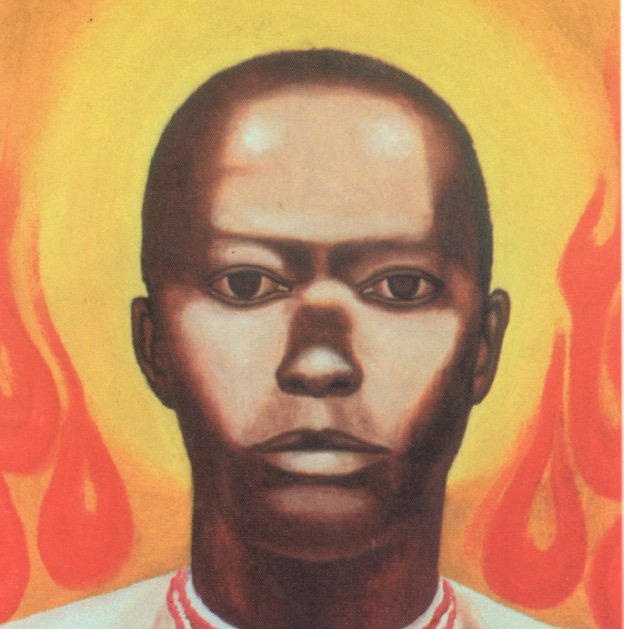
St. Ambrose Kibuuka
Kibuuka was a Muganda of the Spiny Anti-eaters (Lugave) Clan. He and his friend Achilles Kiwanuka were cousins. His father was Kisuule, an official King’s drummer of Mujaguzo.
His father had many wives and about thirteen children almost all girls. Kibuuka was almost the only boy that is why he was also called Katekamulungaggana, in short Katekamu – the only boy among many girls.
Kibuuka with his cousin Kiwanuka and another boy Kigongo Ssemmindi Luinga were taken to King Mwanga’s palace and served as pages. By then he was sixteen years of age and were all put under the care of Charles Lwanga who converted all the three boys to Catholicism.
Kibuuka was active social, talented and active in games, music and always cheerful, and charitable. He was a boy and hardly showed tiredness. On taking up Christianity, Kibuuka abandoned all his witchcraft and burnt it. He begged for baptism and he was baptised on Monday night 16th November, 1885.
When the Christian persecution broke out, Ambrose and his cousin Achilles were arrested. Their friend Kigongo went back and informed the parents of his friend’s arrest, they were arrested on Wednesday morning 26th May 1886 and were both in the group of Charles Lwanga. They were taken to Namugongo, and burnt to death on Thursday noon, 3rd June, 1886 at the age of 18.
Ambrose is the patron of socialists and youth movements such as scouts and Xaverians.
St. Ambrose Kibuuka
Kibuuka was a Muganda of the Spiny Anti-eaters (Lugave) Clan....

St. Gyaviira Musoke
Musoke was a Muganda of the Lung-Fish (Mamba) clan. He was a page under the command of Charles Lwanga. His main job was a messenger. He was quick, accurate, and trustworthy and he hated back-bitting.
Gyaviira is a nick name which means “the place where he comes from is feared”. This is referred to his place of origin, Sseguku, along Kampala-Entebbe Road, His father Ssemalago was a guardian of the important shrine and a famous priest to god Mayanja (A special leopard).
He also gave the name Mayanja to his beloved son Gyaviira whom he was planning to take over the office in future. He had learnt a lot of tactics concerning witchcraft. But when Musoke was taken to the palace to serve as a page, Charles Lwanga miraculously converted him to Catholicism to a point of abandoning and all his witchcraft and charms and burning them up.
His parents heard of it and ordered him not to do so; to choose between his ancestor’s religion or being thrown out of the clan. He chose the letter, never turning back. Thus Gyaviira was totally thrown out of his clan. He was happy to suffer for Christ.
But on one day when he was splitting woof with Mukasa Kiriwawanvu, who was extra-ordinarily tall, the boy wanted to enjoy the fun of calling him Mugulumpaali (Long leged). Kiriwawanvu was so annoyed that in turn, he beat Musoke up whom in turn accused him to the King. The King imprisoned Mukasa at Bumbale Prison as a punishment.
When the Christian persecution broke out, on their way to Namugongo, Gyaviira and Kiriwawanvu forgave each other and encouraged each other to die for Christ.
Gyaviira was burnt to death at Namugongo, Thursday noon 3rd June, 1886 at the age of 16.
Gyaviira is the Patron saint of traffic communications and those troubled by witchcrafts.
St. Gyaviira Musoke
Musoke was a Muganda of the Lung-Fish (Mamba) clan. He...

St. Anatoli Kirigwajjo
Kiriggwajjo was a Monyoro from Kyaka County in Toro. He was of the Basiita descent belonging to the bush-buck clan. His parents are unknown.
He was captured by the raiding Baganda at the age of 16 and taken to a chief known as Kisomose. It was Kisomese who took him to the palace of the King Muteesa I to serve as a page.
Kiriggwajjo served mainly in the Twekobe (King’s House) under Joseph Mukasa Balikuddembe and he was a skilled hunter and a good herdsman who had keen interest in both of these skills and who used his talents whenever he had chance.
He took up catholic instruction given by these two. Kiriggwajjo was a very strong and pious catholic. During King Mwanga’s reign, Kiriggwajjo served in the audience hall. The King loved him and promoted him to a post of Caring for his wives’ rooms and commodities form outside.
Anatoli found out that the post would destroy his beloved virtue of chastity. He thus dared to decline the post though he was sure it would result into the loss of his life. But this time though the King got very annoyed, he did not order for his death.
When the Christian persecution broke out, the King signed him out and said “This Munyoro page, refused the post I gave him, thus despising me”.
Anatoli was burnt to death at Namugongo on 3rd June, 1886. He is the patron of hunters and herdsmen.
St. Anatoli Kirigwajjo
Kiriggwajjo was a Monyoro from Kyaka County in Toro. He...
St. Achilles Kiwanuka
As most of the martyrs Kiwanuka was a Muganda from Lugave clan. His father was Kyazze and his mother was Nassazza Talidda of the Civet-cat Clan.
He was born at Luagala near Ssingo County. As Kiwanuka’s father was a deputy County Chief for a long time due to efficiency, the son became famous like his father and a gate keeper of Mukwenda.
At the age of fifteen, Kiwanuka was selected to go and serve King Mwanga II as a page. He went with cousins and took witchcraft for their protection but on arriving, they were converted to Catholicism by their elder Charles Lwanga, convinced and they burnt all witchcraft. But their parents and relatives threw them out of the Clan.
Kiwanuka worked in the audience hall. But whenever he had a chance during his free time, he could learn how to read and write. Sometimes he served as a messenger.
He was also baptised on Monday night 16th May, 1886 at the age if seventeen. Achilles is patron of journalists, press writers, printers and artists.
St. Achilles Kiwanuka
As most of the martyrs Kiwanuka was a Muganda from...

St. Kizito
His father was Lukomera and his mother was Wangabira Kaddulubaale of the Civet-Cat (Ffumbe) Clan. Our Martyr was born in Bulemeezi County about 1872.
He was selected to go for the service of King Mwanga II as a page and made to serve the private chambers of the King. He was always jolly, good at sports mainly at swimming and wrestling. The boy was also playing music particularly at playing the xylophone. All that and is popular among his companions.
King Mwanga used to force him to practice blandishments, but due to the constant help of mainly Charles Lwanga, the boy always stood firm against both the blandishments and the threats of the King.
Kizito constantly besought Fr. Lourdel for baptism for fear of being put to death without being baptized. The priest always put him off because of his immature age.
When the Christian persecution broke out, the night before the arrest, Kizito was baptized by Charles Lwanga in case of emergency and given the name John Baptist.
He together with the other Christians was arrested on Wednesday morning 26th May 1886, given a death sentence and taken to Namugongo.
On Ascension Day Thursday noon 3rd June, 1886, Kizito was burnt to death for Christ’s sake. He is the patron of young children particularly those below the age of 15 years.
St. Kizito
His father was Lukomera and his mother was Wangabira Kaddulubaale...
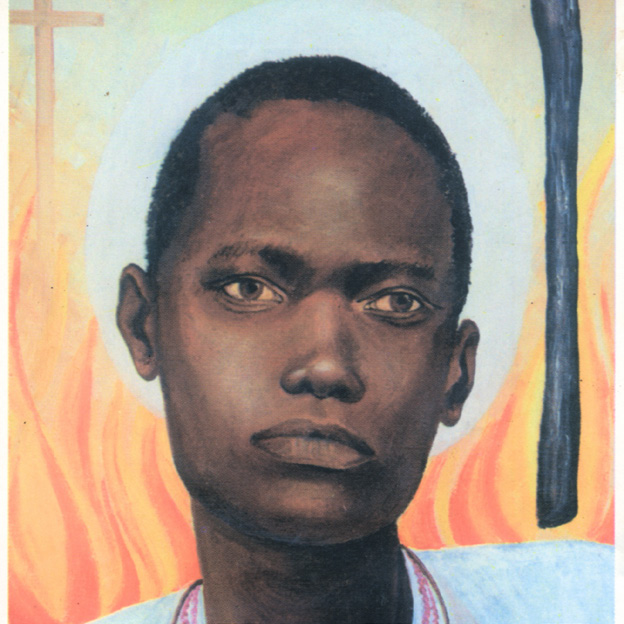
St. Mbaaga Tuzinde
Tuzinde was a Muganda of the Colonbas monkey (Nkima) clan, his father was Katamiiza Mukajanga, the chief executioner of the lung fish clan was his uncle by pact. Tuzinde’s mother was Bakuwamumanyi of the Yam fruit (Kkobe) Clan.
Tuzinde was born in 1869 at Luyonga (Limuli) village bear Naddangira parish in Busiro County. He grew up with his parents, but at the age of 14, Tuzinde was taken to his uncle Mukaajanga who selected him to go to the palace of Mwanga as a page.
At the palace, Tuzinde served as a page in the audience hall in charge of the food for the visitors. One day in a jocking way, some friends demanded for meat from him and he answered “Mbaaga?” (I am slaughtering). Hence he was nicknamed Mbaaga.
Mbaaga soon became interested in the Catholic Faith due to the good examples of the Catholic pages. He was instructed by his leader Charles Lwanga.
When the Christian persecution broke out, Mbaaga played a very heroic part in defence of his vocation against his uncle Mukaajanga right from the beginning to the end. His relatives did their best to make the boy deny the religion in order to save his life, but failed at Namugongo.
Mbaaga spent a week with his relatives forcing to deny his religion. Despite the promises and tortures for a whole week and nights they failed. At the Namugongo furnance, Mukaajanga tried the last time. The boy was hit on the head and his body was thrown on the pyre of Namugongo, where it was burnt to ashes for Christ on Thursday noon 3rd June, 1886.
Mbaaga is the patron of vocations mainly of the seminarians, aspirants, postulants and novices.
St. Mbaaga Tuzinde
Tuzinde was a Muganda of the Colonbas monkey (Nkima) clan,...
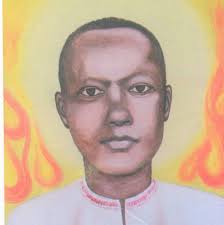
St. Mugaga Lubowa
Lubowa was a Muganda of the Leopard (Ngo) clan. His father was Mazinga who had three wives. The mother was Munanadduli Nassibwa of the Bufallo clan who gave her son another name “Mugagga”, expecting to amass some fortune. The name means “He is rich” according to the Kiganda custom. Mugagga was send to Seddu Kakinda, the head of the clan for the better training of the clan affairs.
It was Seddu who presented him to King Mwanga’s services as a page. He worked first in the audience hall under Charles Lwanga and then ne was taken to private section of the enclosure under Joseph Mukasa.
It was these two who gave Lubowa instructions. He had fought hard against blandishments and threat of the King for the virtue of Chastity. He was very much helped by balikuddembe and Lwanga because he was open to them.
Lubowa was kind, cooperative, intelligent, trustworthy, and always ready to help others but not caring for himself and dressing rather roughly. He was strong in both body and determination and used to gather his equals for religious instruction, games, handcraft etc., that they used to do during their free time.
When persecution broke out, the night before the arrest, Mugagga was baptized by Charles Lwanga. He was arrested on Wednesday May 26th 1886 taken to Namugongo and burnt on Thursday noon June 3rd, 1886 at the age of sixteen.
He is the patron saint of clubs, community development, and culture and home crafts.
St. Mugaga Lubowa
Lubowa was a Muganda of the Leopard (Ngo) clan. His...

St. Mukasa Kiriwawanvu.
Kiriwawanvu was a Muganda of the sheep (Ovis-Ndiga) Clan. Descending from Mpanga of Mbaale Mawokota County, in the family of Ndalu. Mukasa was borth Nakasawula (Kyaggwe County), Naggalama Parish in Lugazi Diocese. His father was Lumanyika, a very good wrestler.
He wrestled King Muteesa I down in a friendly contest. In recongnition of his power, the King gave him a Musoga girl called Mulookuvaayo and this was Lumanyika’s first wife thus the mother of Mukasa Kiriwawanvu.
They moved from Kiryankolo in Ssingo County to Nakasawula also in Ssingo where Mukasa was born. At the age of about twelve years, Mukasa was taken to his uncle Mugulandiga, by then the deputy county chief of Ssingo. He was deputy to Kawuulukusi Muwemba also of the same clan.
It was Muwemba who took him to the palace of King Muteesa I to serve as a page at the age of 16. While at the palace, Mukasa was attracted to the good behaviour of the Catholics particularly of his two masters, Joseph Mukasa and Charles Lwanga.
One day, while splitting firewood, Gyaviira called him Magulumpaali (long-legged). Mukasa beat up Gyaviira and was taken to Kimbale prison near the palace without trial. When the Christian persecution broke out, the two met and forge each other and were burnt together at Namugongo on Thursday June 3rd 1886.
Mukasa is the only martyr who received the baptism of blood. He is the patron if hotels, bars and restaurants.
St. Mukasa Kiriwawanvu.
Kiriwawanvu was a Muganda of the sheep (Ovis-Ndiga) Clan. Descending...
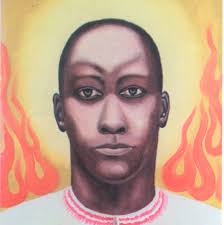
St. Adolf Mukasa Ludigo
Ludigo was a Mutoro, born in Musazi village in Myeri of Bufonjo locality in Mwenge County of Toro. His father was Bamwesekera and his mother Klyote.
The Baganda raiders captured him and took him to King Muteesa I’s palace. At the palace Ludigo was in charge of the gardens where the pages were supposed to work. The name Ludigo was a nickname because he resembled a chief of Bunyoro called Ludigo.
At the palace Ludigo, was surprised and very much impressed by the good behaviour of the catholic pages. Thus he having the Catholic Instructions under Joseph Mukasa who also introduced him to the Catholic Missionaries for further instructions.
When the missionaries fled to Tanganyika in1882, Ludigo went to Kaggwa’s home that turned into a new mission instead of Lubya. On finding out that the number of converts was growing every day and the people had to eat, Ludigo went to the kitchen to help Kaggwa’s wife and other volunteers. He left the instructions to Andrew Kaggwa for most of the time.
Ludigo was baptised very soon on Monday night November 16, 1885 and got the name Adolphus. This was the day that followed the Killing of their master Joseph Mukasa.
Ludigo anticipated his arrest and death, so he was very happy and put on his best as if he was preparing for a party. Over this beautiful tunic he wore his beautiful antelope skin which was for special occasions. He was arrested together with other Christians on Wednesday morning and taken to Namugongo where he was burnt to death on Ascension Day, Thursday June 3rd, 1886, at the age of twenty four.
He is the patron of farmers and herdsmen.
St. Adolf Mukasa Ludigo
Ludigo was a Mutoro, born in Musazi village in Myeri...

St. Bruno Sserunkuuma
Sserunkuuma was a Muganda of the sheep Clan. His father was Namujulirwa the County Chief of Buddu (Pookino). Namujulirwa was a polygamist. Sserunkuuma’s mother was Ndibaliza of the monkey clan.
He was born at Masaka at the site of Ssaza (County Headquarters). Sserunkuuma was taken to King Muteesa 1’s palace. We don’t know when, but we are sure that in 1876 he was at the palace with Byakweyamba and given the post of Kitanda outside the palace.
He was one of the first pages Joseph Mukasa converted to the Catholic faith. He was violent, cruel, lived recklessly was impudent and drunkard.
He strove manfully to master his temper and to control his passions. But even after baptism, Ssekunkuuma has not yet fully mastered himself. At one occasion King Mwanga gave him two beautiful girls in appreciation for his work. Sserunkuuma took them home as his wives and soon made one of the pregnant.
When his fellow Catholics, Charles Lwanga and Andrew Kaggwa in particular learnt of it, they worked hard to help him as a friend. He listened to their advice, called for Fr Loudel and made a sincere confession, so determined Sserunkuuma left his wives and property and went to one of the corners of the palace where he devoted himself to prayer, penance, teaching of religion and works for mercy.
This is where Christian persecution met him. On his way to Namugongo, his brother Bbosa gave him beer. But remembering the thirst of Christ on Cross, he refused it. He constantly and bravely encouraged others not to give up. He died on 3rd June 1886.
He is the patron saint of alcoholic, the violent, those with lust of flesh and improper marriage.
St. Bruno Sserunkuuma
Sserunkuuma was a Muganda of the sheep Clan. His father...
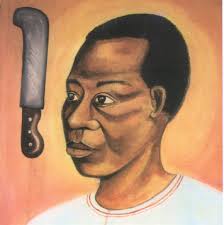
St. John Mary Kiwanuka Muzeeyi
Kiwanuka was a Muganda of Buffalo (Mbogo) Clan originating from Ssenge in Busiro County. His father was Bunga who had many wives and about one hundred children. Of these, seventy four survived forty one boys and thirty three girls. His mother was Kasswa of the Monkey clan.
Kiwanuka was born at Minziiro at the boundary of Tanzania and Uganda. He was brought up at Kakuuto near Bigada Parish.
It was Bigomba an official in the private apartment if the King who took Kiwanuka to the People of King Muteesa I. Bigomba was in charge of the intelligence department.
The boy worked as page. Kiwanuka was exceptionally intelligent, when he took up the catholic instructions; it took him only three days to learn all the prayers and the whole catechism in four months.
Muzeyi had an exceptional devotion and knowledge in the traditional medicine of various diseases. Though not official, John Mary Kiwanuka Muzeyi could be considered the first Uganda religious brother.
St. John Mary Kiwanuka Muzeeyi
Kiwanuka was a Muganda of Buffalo (Mbogo) Clan originating from...

Explore Our Pilgrimages
Discover destinations designed to inspire your faith and enrich your journey.
Frequently Asked Questions
Find answers to common questions about our tours and planning process.
Need Assistance From us?
If you need further assistance, feel free to contact us directly. We’re here to help!

Create Memories You’ll Forever Remember
Our pilgrimages are thoughtfully tailored to provide meaningful experiences for the Catholic faithful.
TALK TO OUR EXPERTS
+256772315325